
- Home
- News
- Case Studies
- Probat L12 Upgrade – Fully Intelligent Refurbishment Solution
Probat L12 Upgrade – Fully Intelligent Refurbishment Solution
This retrofit case features the German Probat L12 coffee roaster, a classic manual model manufactured in 1998. It is an iconic machine with a long history.
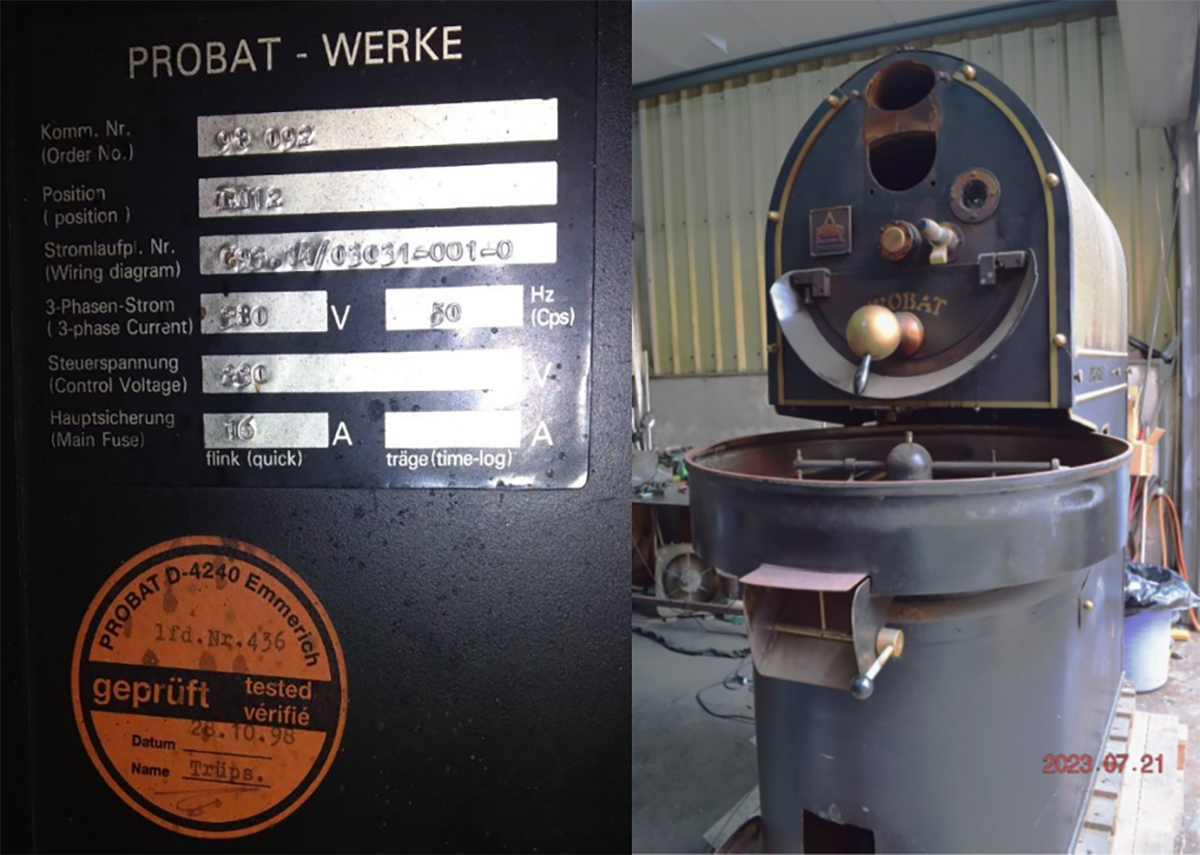
Left: Nameplate of the machine; Right: Original appearance before modification
Original issues of the machine:
Earlier-generation coffee roasters often come with the following inherent problems:
- The exhaust system and cooling system share the same motor. This design forces the production time to be extended, as the system switches airflow using a damper. This means that cooling cannot occur during roasting, and roasting airflow stops when cooling is in progress.
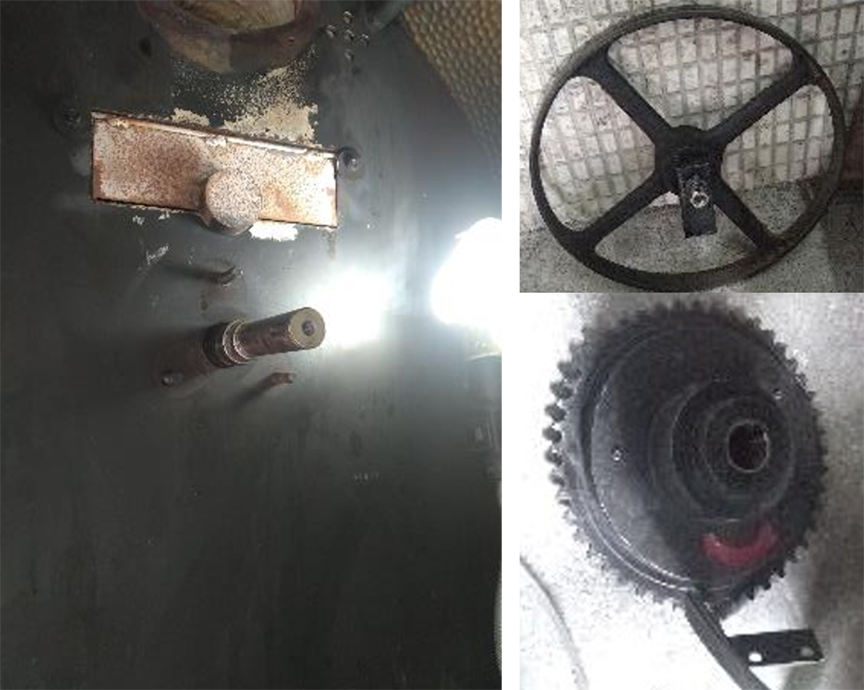
- The drum motor and cooling stirrer motor also share the same motor. The stirring mechanism is activated through mechanical linkages. For modern electronic control, these systems must be separated. A single motor controlling two functions also poses a risk—if the motor fails, both systems stop. The original motor also cannot be electronically controlled.
- The chaff collection area is difficult to clean—a common issue found in early coffee roasters, where ease of maintenance was not a primary design consideration.
- The cooling tray base plate was severely rusted. The previous owner had left the machine unused for some time, causing serious corrosion inside the cooling system.
- The electrical configuration was 380VAC, but the customer required 220VAC single-phase, so the power specification needed modification.
- The ignition system was outdated and manual, lacking modern safety features.
Key points of machine modification & refurbishment:
| 1. Added automated mechanisms (automatic bean charging & discharging) | 6. Independent electrical control system |
| 2. Separated chaff exhaust and cooling air systems | 7. Added software operation interface |
| 3. Added chaff collector (cyclone separator) | 8. Added continuous production mode |
| 4. Adjustable drum speed & airflow | 9. Automatic logging of roasting parameters |
| 5. Added electronic ignition & flame control system | 10. Data digitalization |
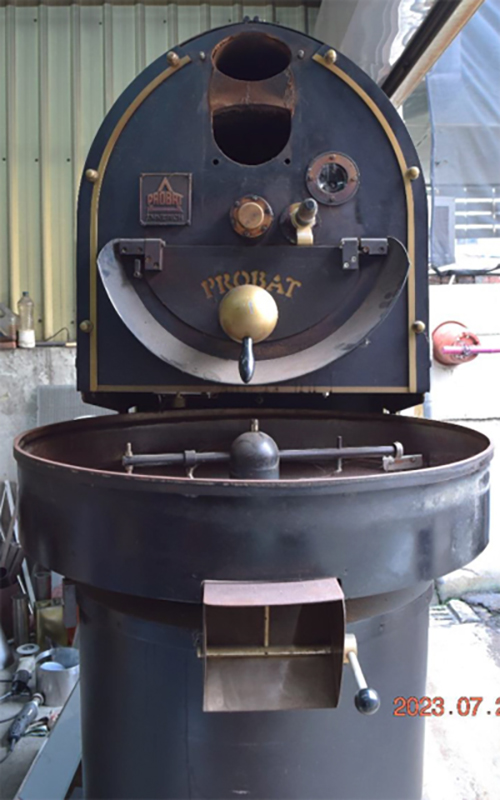
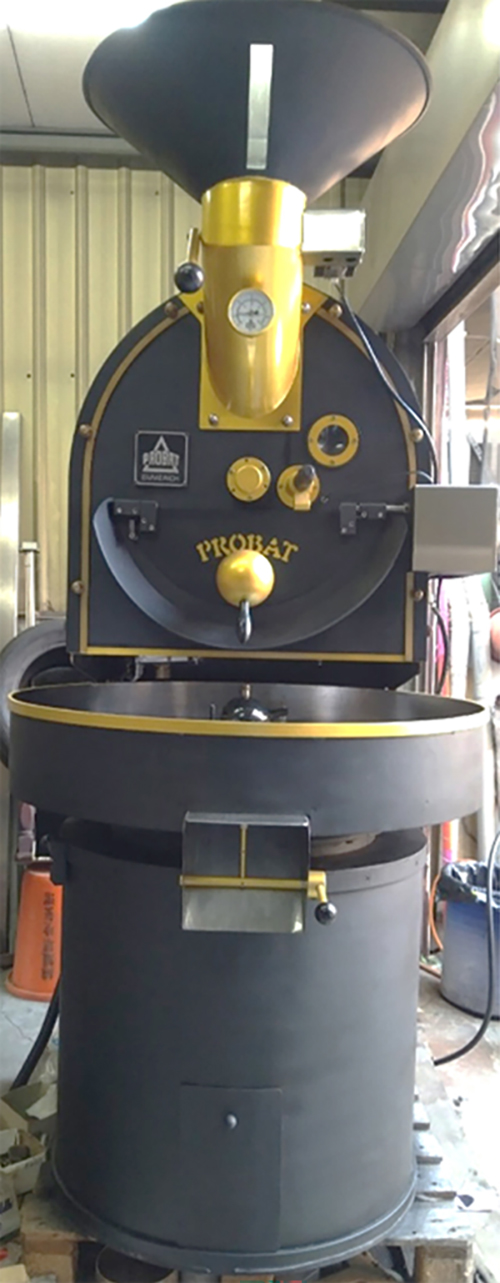
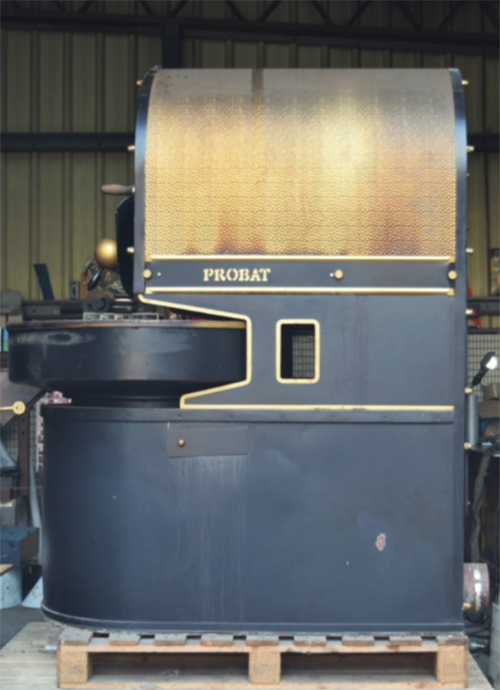
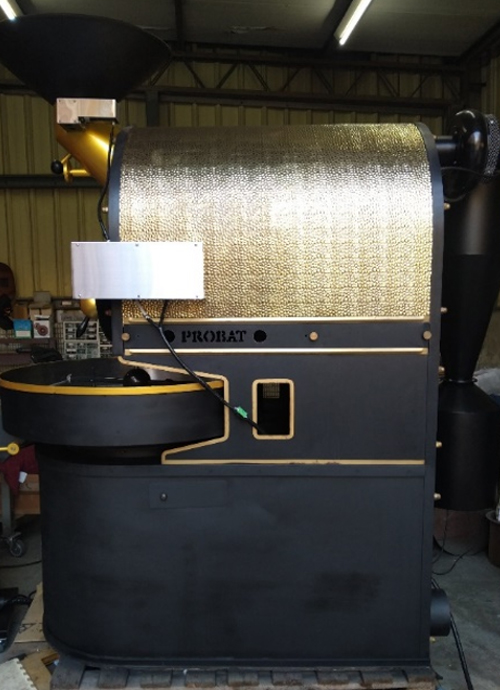
The following comparison images show the differences before and after the modification, along with explanations of various details:
Front View
Before
After
Side View
Before
After
Rear View
Before

After
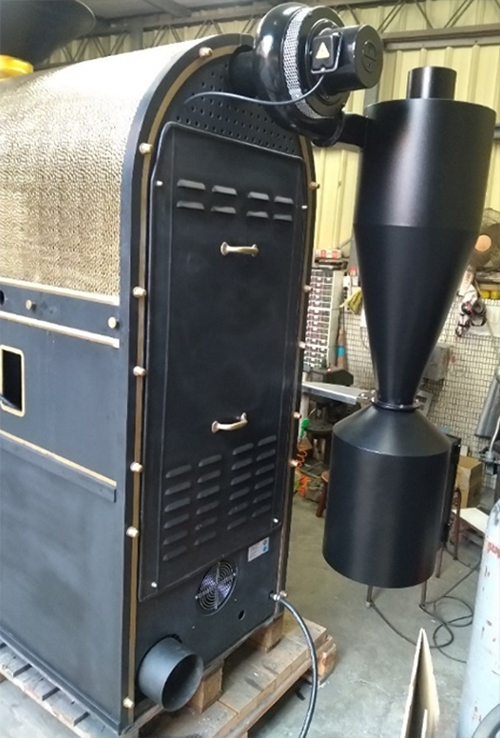
The machine body was restored by repainting the original steel plates and re-polishing the exterior panels. A new chaff collection barrel and automated bean loading/unloading mechanisms were also added.
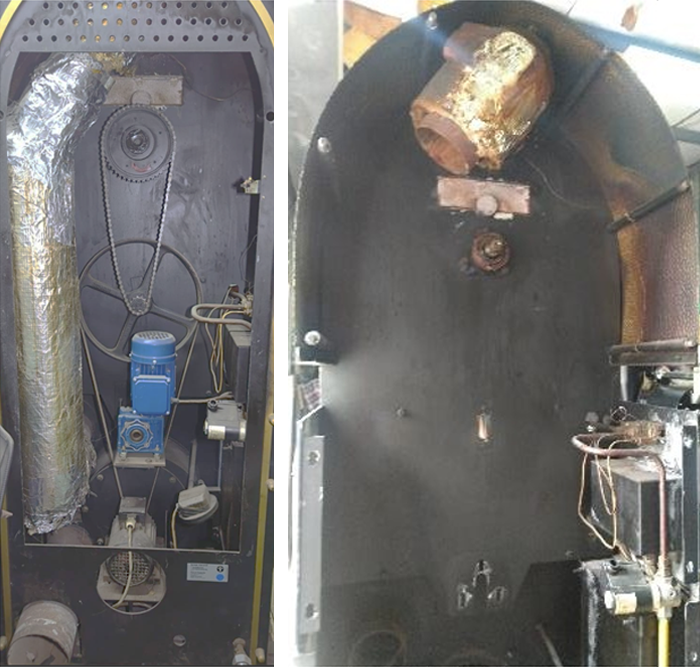
Internal Structure
Before
After
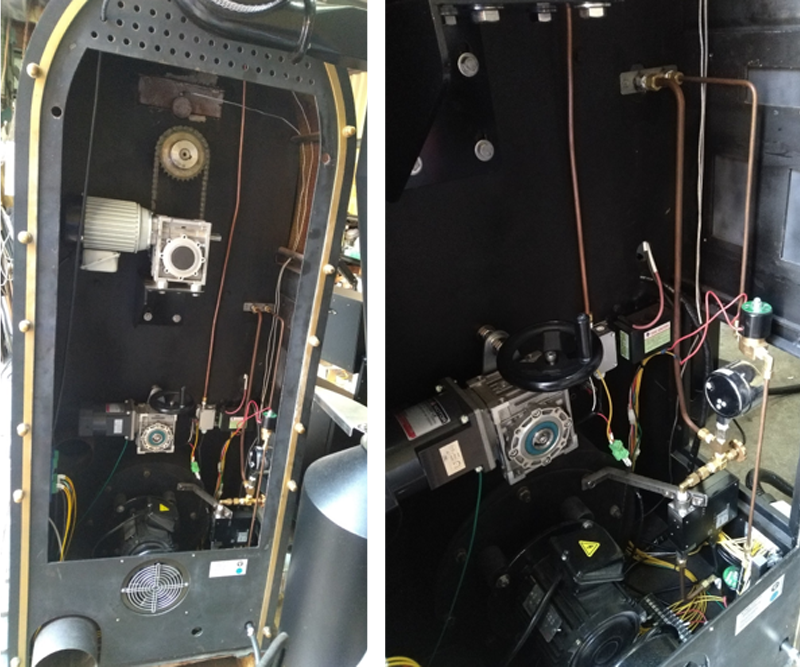
All previously shared systems were converted into independent systems, including the drum, stirrer, chaff exhaust, and cooling systems. This greatly improves roasting stability and efficiency.
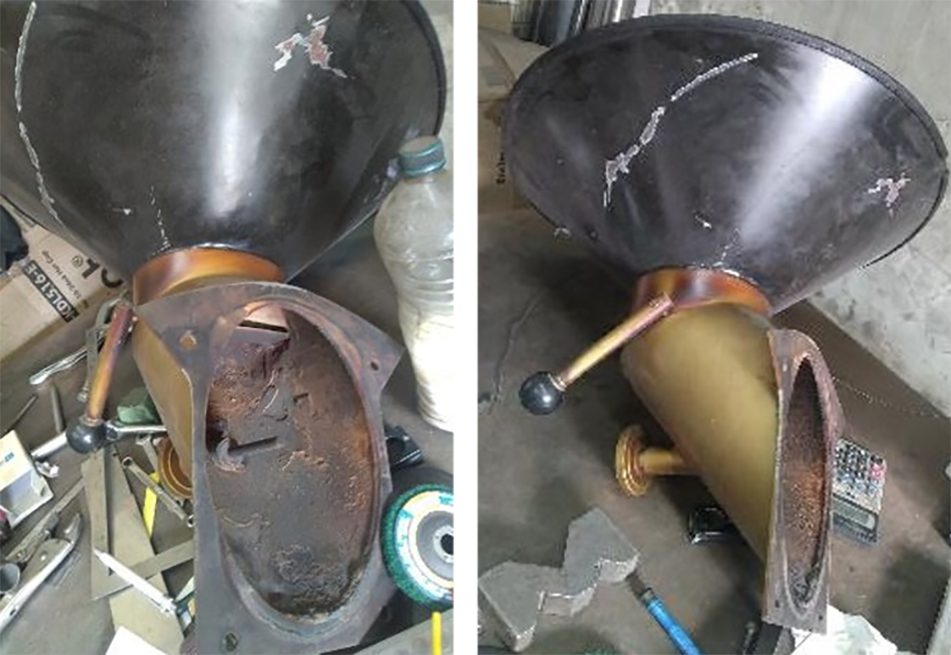
Component – Bean Hopper
Before
After

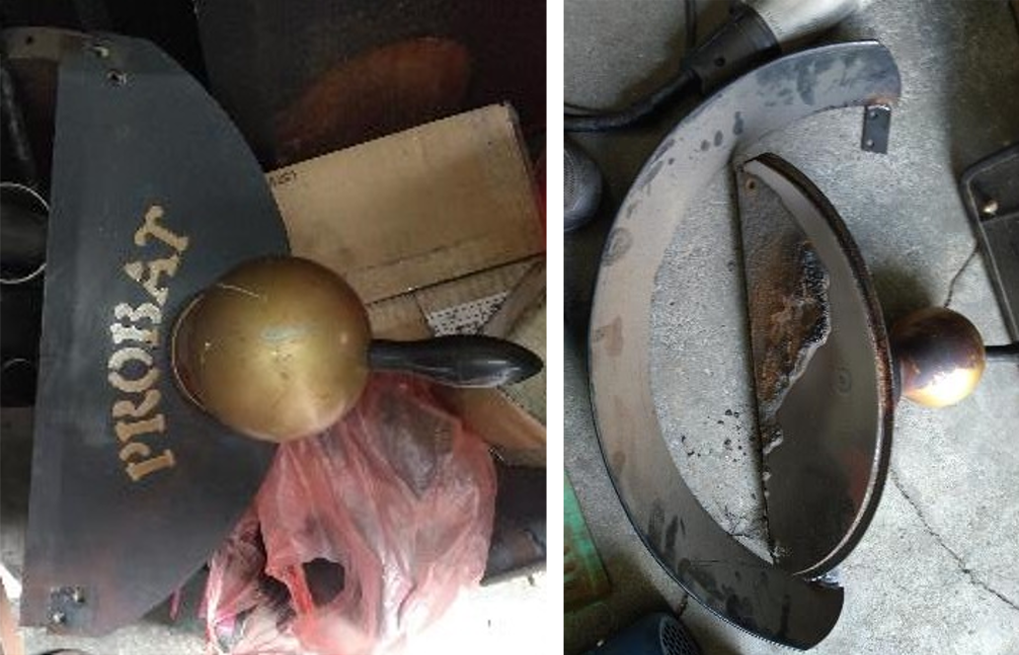
Component – Discharge Plate & Hammer
Before
After

Component – Front Panel
Before

After

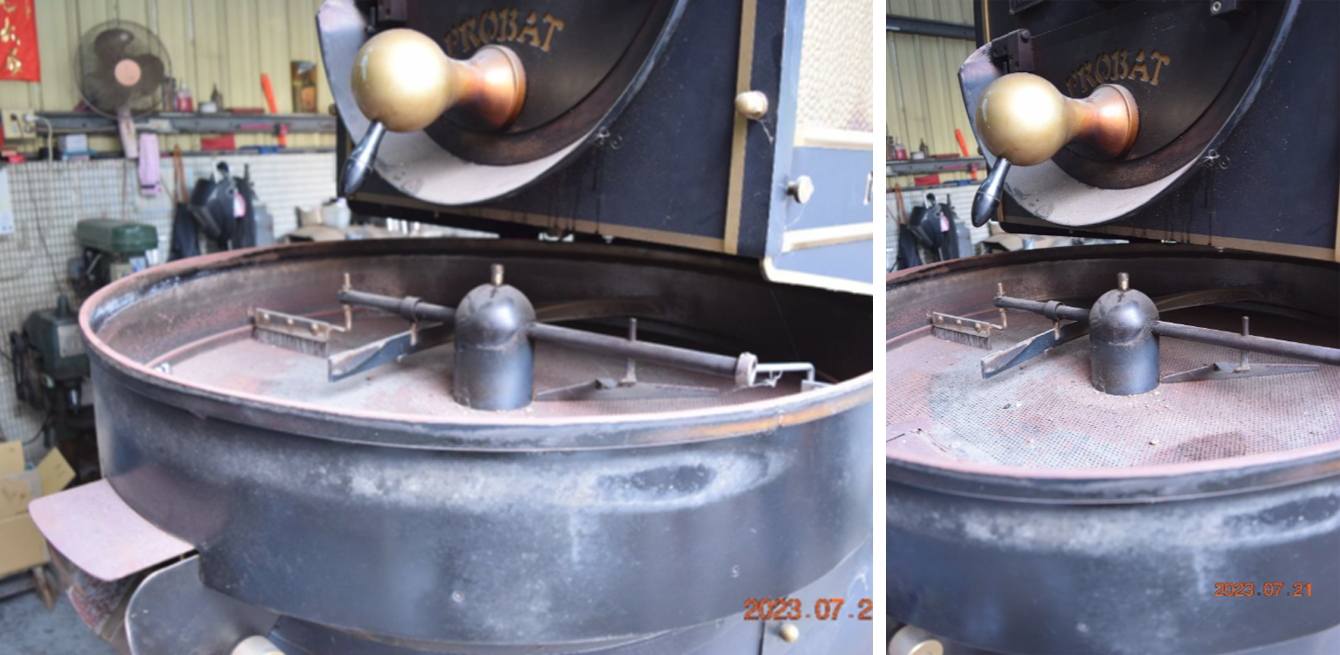
Stirring System
Before
After

The original stirring system was severely corroded, so we rebuilt the entire base plate with 304 stainless steel. After repainting the outer shell and replacing the internal base plate with stainless steel, the original stirring lever was restored to near-new condition.
Cooling & Exhaust Duct System
Before

After

The original machine used a lever to switch airflow between drum exhaust and cooling duct. In the upgraded system, both are independent, so this switching mechanism was removed to allow smoother airflow and reduce chaff buildup.
Drum Drive System
Before
Original drive mechanism
After

1. New drum motor
2. Independent drum drive
3. Emergency hand crank for power outage
Original Operating System
Before Upgrade

After Upgrade

The area marked as Box 1 was originally used for flame control and switches. This section has been removed and covered with a flat panel.
The area marked as Box 2 was originally empty with no specific function. A main flame adjustment valve has now been added in this location.
The area marked as Box 3 was originally the electrical control box. The old electrical control system has been completely removed, and the space is now used for routing the gas system pipelines.
Box 4 is a newly added independent electrical control box that connects to the main unit’s interface points.
Gas System
Before Upgrade
Old Gas Piping

Old Solenoid Valve

After Upgrade
Intelligent Gas Control System

Safety Ignition System

The original gas system was extremely basic with no safety protections and relied entirely on manual ignition. After the upgrade, pressure gauges were added for real-time monitoring, and the gas output is now controlled through the software system for stable flame adjustment. A full safety ignition mechanism has also been added to ensure operational safety.
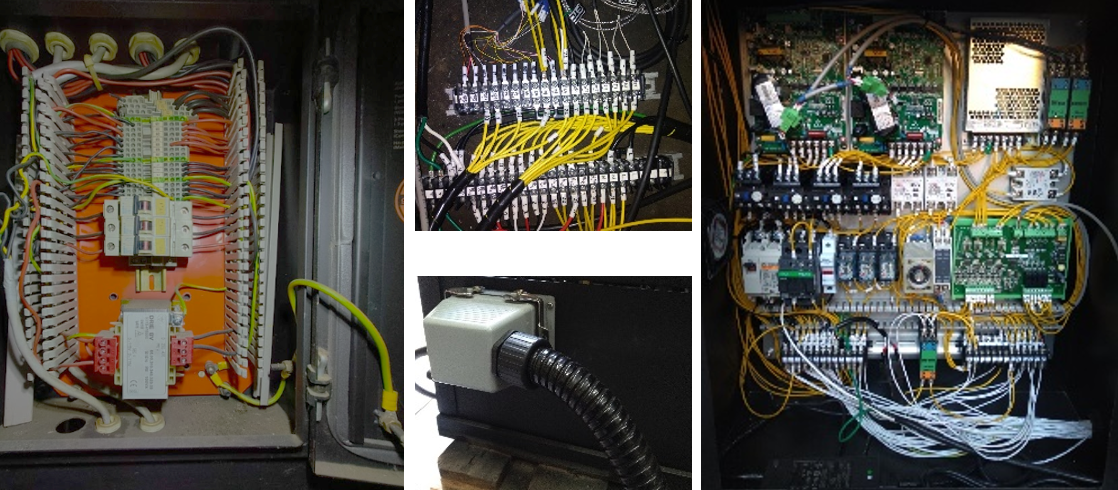
Electrical Control Cabinet
Before Upgrade
After Upgrade
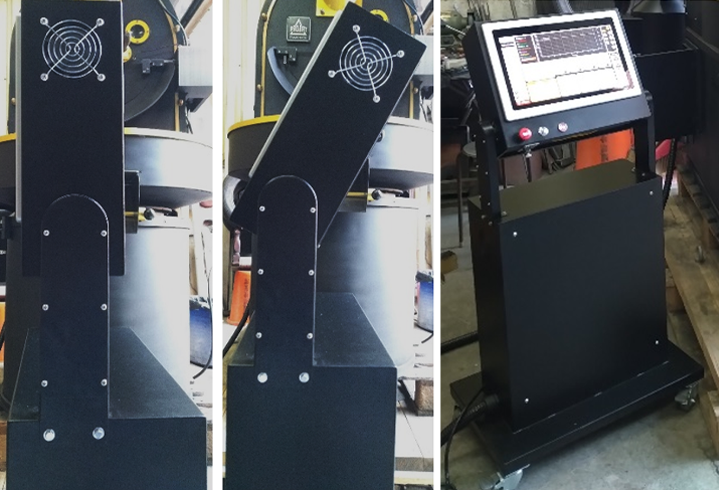
The original wiring and power distribution system were removed and replaced with a completely redesigned electromechanical layout. The new configuration separates the electrical system into an independent control cabinet, providing a safer and more convenient operating experience. The adjustable control panel angle accommodates users of different heights. Additionally, essential safety components such as an emergency stop button and a buzzer—absent in the old system—have now been added.
Bean-Feeding System
Before Upgrade

After Upgrade

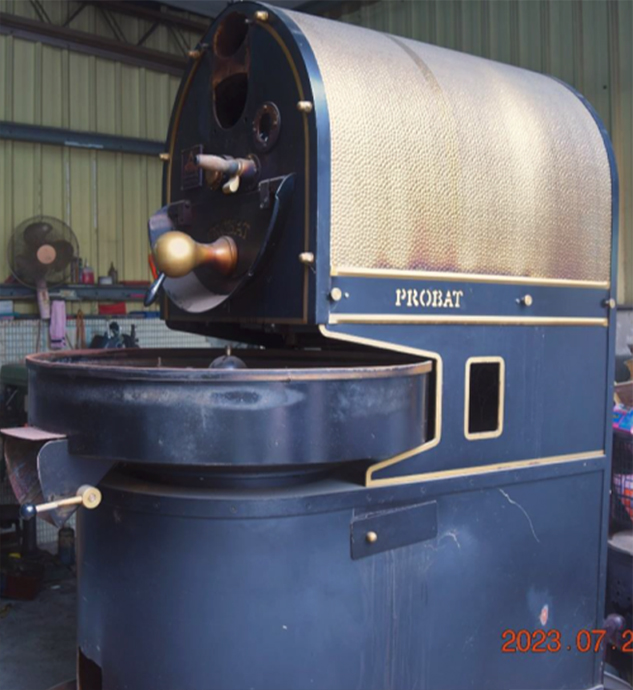
Bean-Discharge System
Before Upgrade
After Upgrade
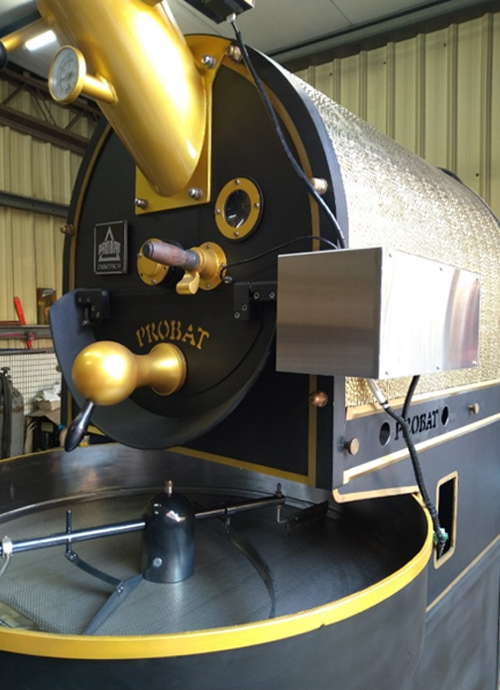
The original machine used a manual lever for bean feeding. We kept the original lever mechanism and integrated it with a motorized actuator controlled through the software system, enabling automated bean charging based on preset conditions. The discharge hammer was preserved as well, enhanced with a drive motor to enable automated bean release. We aimed to retain as much of the machine’s classic appearance as possible while adding intelligent control capabilities.
Embedded Test Run Video
Professional UI Operating Software
1. User-Friendly Interface

Through professional UI design, the operating complexity of large traditional roasting machines is greatly reduced. It shortens the learning curve and significantly boosts production efficiency. The left panel displays all essential data clearly, allowing roasters to free up their hands to focus on roasting decisions and bean color observation instead of machine operation.
2. Independent cooling and exhaust ducts allow continuous roasting without waiting for cooling to finish.
3. File naming is fully customizable, supporting internal production management workflows.

4. Intelligent parameter recording—everything is digitized and auto-saved. Multiple modes help reduce production costs.

There are five main operating modes:
1. Manual Mode: Maximum flexibility for testing roast parameters.
2. Roaster Mode: Input a roasting plan and the system automatically adjusts gas, airflow, drum speed, and performs bean discharge based on preset conditions—ideal for high-volume production.
3. Constant Temperature Mode: Roast at a fixed temperature—excellent for non-coffee products and for testing bean characteristics.
4. Replication Mode: The system replicates a previous roast profile exactly—perfect for users focused on handcraft precision.
5. Curve Tracking Mode: The system follows a reference curve precisely—ideal for users with strict profile requirements.
6. Overlay Function: Compare past roast curves for real-time adjustments.
7. Cooling Stir Timing: Set stirring intervals to increase cooling efficiency.
8. Continuous Production Mode: For repeated roasting of the same profile.
9. Multiple Bean-Discharge Methods: Discharge by bean temperature or by development time.
5. Parameter Editing Area – Automatically reads parameters and allows fine-tuning for analysis and profile refinement.

The system can automatically detect operation points even in manual mode. After system detection, users can make fine adjustments and save a new profile for future roasting.
6. Reference Point Naming & Maintenance Tracking

All reference points can be renamed for easier recognition. Users can also track total roast count and daily roast count, helping with machine maintenance and production management.
Finally, we would like to extend our gratitude to HOLD Good Coffee for giving us the opportunity to upgrade this classic German Probat L12 and for providing valuable feedback on the software. Our goal is not only to restore and enhance the equipment but also to ensure that users have an excellent operating experience.